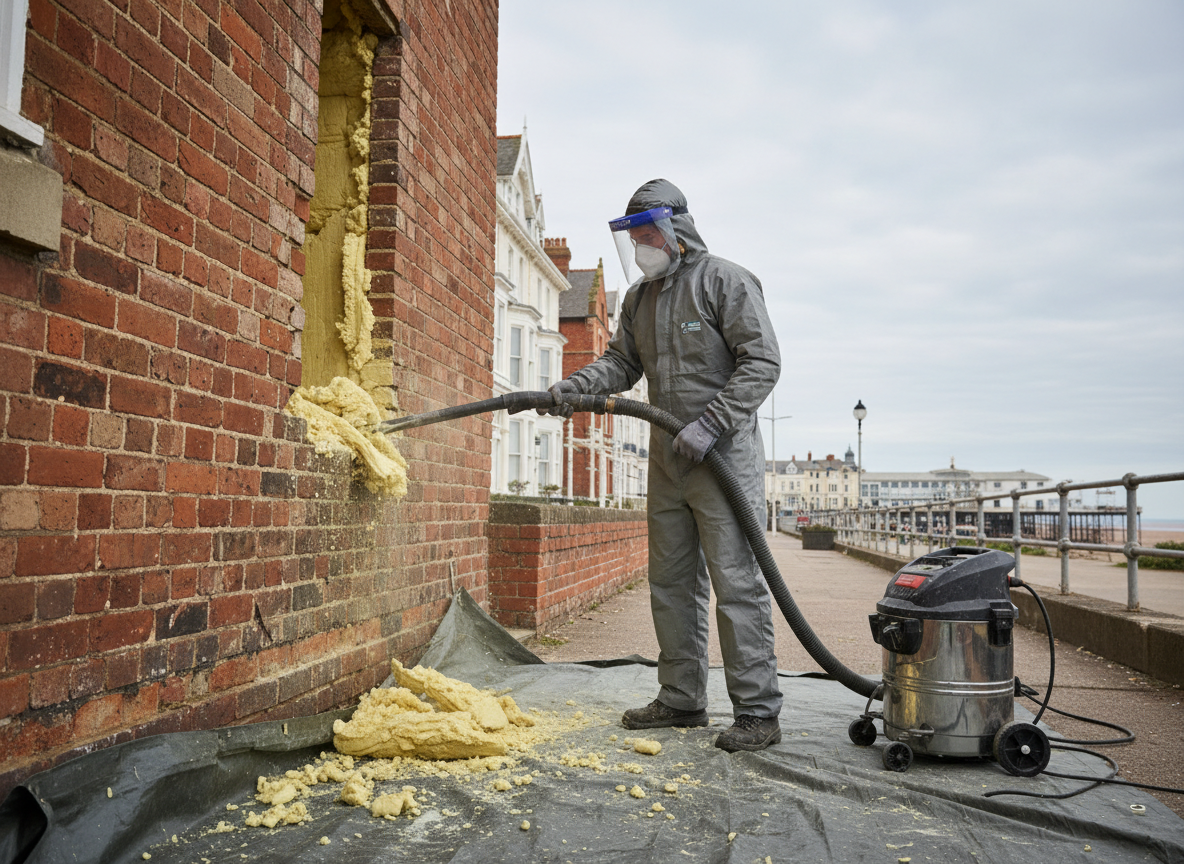
Cavity wall spray foam installed in Weston Super Mare properties from the 1970s onward often fails when salt-laden air and driving rain penetrate the outer brickwork. Over time the foam shrinks, pulls away from the masonry, and traps moisture against the inner leaf, leading to damp patches on internal walls especially in terraces along the seafront and in areas like Uphill and Worle. Removal requires careful drilling patterns that follow the original cavity layout to avoid disturbing electrical cables or pipework common in these mid-century builds.
Extraction begins with targeted access holes at the base of each cavity and works upward, using negative pressure equipment to pull loosened foam outward while containing dust. In Weston Super Mare the high water table and frequent winter storms mean crews must also check for water ingress points at ground level before resealing, because any remaining foam fragments can block weep holes and worsen damp once the wall is closed again. Homeowners in Victorian terraces converted to cavity construction frequently discover the foam was injected without proper ventilation provision, creating hidden condensation risks.
After the bulk foam is removed, the cavity is inspected with borescopes to confirm no residue remains on wall ties or insulation bridges. This step is critical in exposed coastal locations where corroded ties are already a concern. Final ventilation is restored through reinstated weep holes and, where needed, new air bricks positioned to suit the prevailing south-westerly winds that hit Weston Super Mare properties hardest.
The work is performed from the exterior wherever possible to limit internal disruption, with scaffolding erected on the sheltered side of the building to manage the strong gusts common along the Somerset coast. Once complete, the walls are left ready for traditional insulation or alternative cavity treatments suited to the local climate.
Technician insight
In Weston Super Mare the thing that catches most people out with Cavity wall spray foam removal is how the salt air along the seafront makes the foam bond tighter to the brickwork than inland jobs, so you often need extra passes and careful pressure control to avoid pulling render off terraces in places like Clarence Road or the promenade.
Seafront Terrace Foam Extraction
A 1970s semi in Worle had persistent damp on the gable wall after foam was injected ten years earlier. Inspection showed the foam had shrunk and blocked weep holes, allowing wind-driven rain to pool inside the cavity. Crews drilled from the exterior, extracted the material under negative pressure, cleared the ties, and reopened ventilation. The wall dried out over the following weeks with no further moisture issues.
How it works
- 1
Site Survey and Cavity Mapping
Technicians examine external walls, locate original injection points, and use borescopes to assess foam condition and any water damage in Weston Super Mare homes.
- 2
Access and Extraction
Small holes are drilled at the base of each cavity; negative pressure equipment draws out the foam while containing debris on site.
- 3
Cavity Cleaning and Inspection
Remaining fragments are cleared and the cavity is checked for wall-tie corrosion or blocked weep holes typical after coastal exposure.
- 4
Ventilation Restoration
Weep holes and air bricks are reinstated or added to suit local wind patterns before the job is signed off.
Pricing
Cost depends on property size, number of cavities, and condition of the existing foam; quotes provided after inspection.