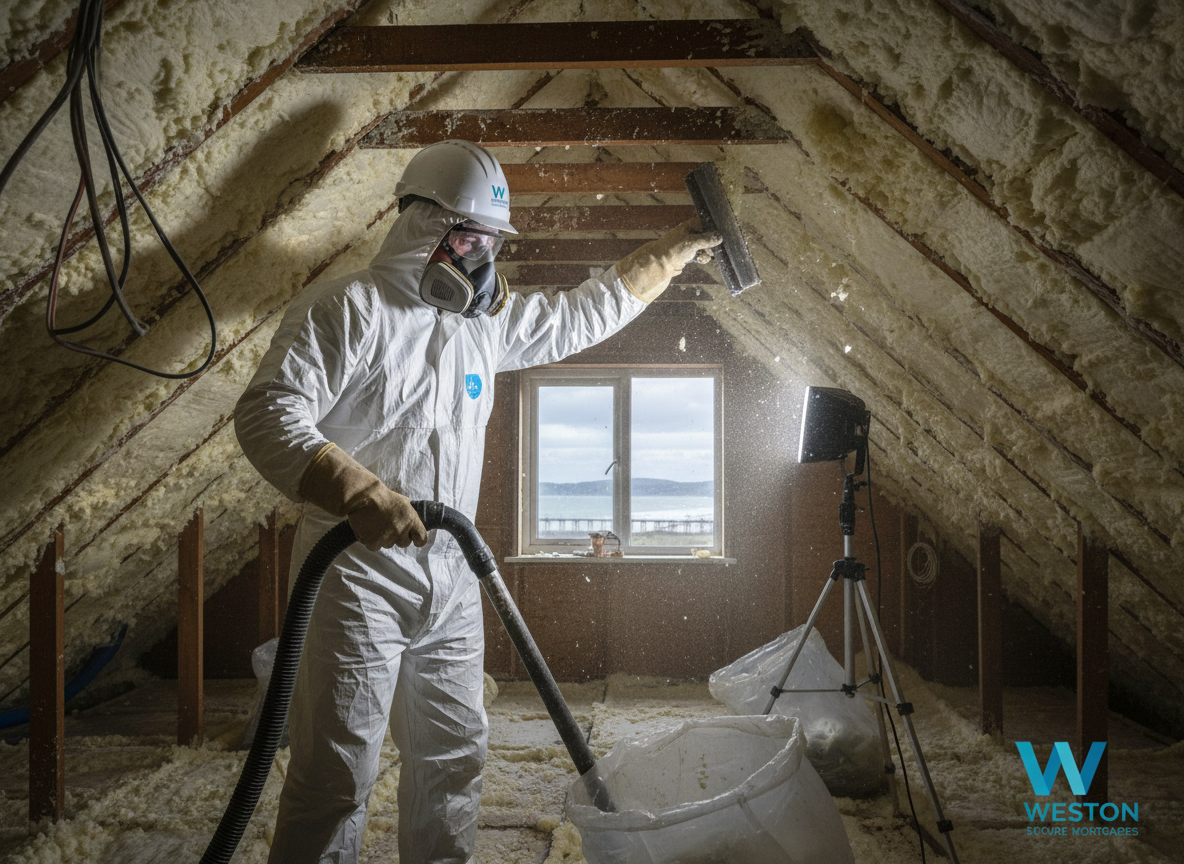
Weston Super Mare's Victorian and Edwardian terraced housing stock around Clarence Road and the seafront frequently features spray foam insulation installed in pitched roofs during the 2000s. Mortgage lenders now reject these installations because closed-cell foam traps moisture against rafters in the area's high-humidity coastal climate, accelerating timber decay that surveyors flag during valuations. Removal requires careful mechanical stripping without damaging original lathe and plaster ceilings below, followed by installation of breathable insulation that satisfies lender criteria.
Edge cases common here include foam applied over electrical cabling or in properties with shared chimney stacks between terraces, where incomplete removal can leave lenders refusing to release funds. Coastal salt air accelerates corrosion on any remaining fixings, so full extraction down to the rafters is essential before reinsulation. Work must also account for frequent high winds that make containment sheeting critical during roof-space operations to prevent debris entering neighboring gardens.
Lenders typically require photographic evidence of complete foam removal plus confirmation that ventilation has been restored to Building Regulations standards. In Weston Super Mare properties, this often means reinstating ridge and eaves vents that were blocked during the original foam application. Homeowners who attempt partial DIY removal risk missing hidden foam pockets that later cause mortgage delays.
Technician insight
In Weston Super Mare, the thing that catches most people out with mortgage lender spray foam removal is the salt-laden air accelerating rot behind foam in 1890s terraces near the seafront, where even small missed pockets around shared chimney breasts cause survey failures.
Clarence Road Terrace Mortgage Hold
A 1905 mid-terrace near 7-9 Clarence Rd N had spray foam blocking all ventilation. Survey revealed damp rafters. We removed the foam layer by layer, restored eaves vents, and supplied lender photos. Mortgage funds released within ten days.
How it works
- 1
Initial Survey And Lender Documentation
Assess foam condition, photograph all areas, and compile report for the mortgage lender showing extent and condition.
- 2
Safe Containment And Access Setup
Protect living areas and neighboring properties from dust and debris using sealed sheeting and negative air extraction.
- 3
Mechanical Foam Removal
Strip foam from rafters, remove all residue, and check for hidden pockets around cables, pipes and shared walls.
- 4
Ventilation Restoration And Final Verification
Reinstate eaves and ridge ventilation, then provide lender-ready photographic evidence of clear roof space.
Pricing
Pricing depends on roof size, foam thickness and access difficulty; upfront quotes provided after inspection.